


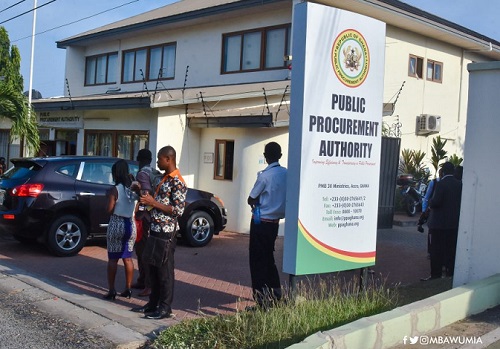
The Public Procurement Authority (PPA) has bemoaned lack of resources, both human and capital to carry out its mandate.
The Authority says it lacks the requisite funds to carry out its operations, inadequate office facilities, as well as incapacitated in going round the country to execute their monitoring and evaluation responsibility.
Currently, the PPA has only three offices across the country with one each in the Western and Ashanti regions together with the headquarters in Accra.
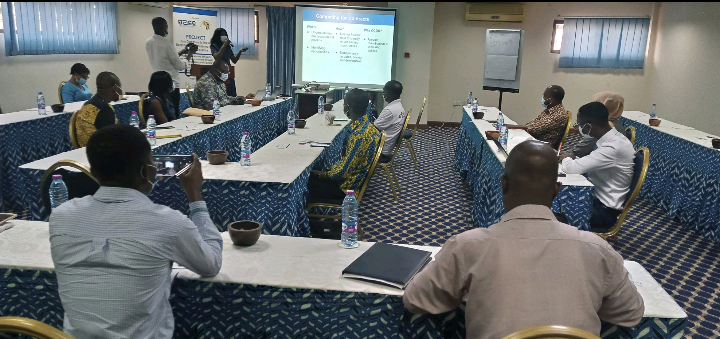
The Head of Corporate Affairs and Facilities Management at the PPA, David Damoah, disclosed this to Ghanas Online on the sides of a workshop on Open Contracting Data Standard organised by the Ghana Anti-Corruption Coalition (GACC), purposed to enhance the culture of data disclosure to reduce corruption associated with procurement.


The PPA, established by the Public Procurement Act, (Act 663) as amended, is to regulate public procurement among public institutions in Ghana.
The Authority does not authorise procurement, but rather regulates public entities to ensure they comply with procurement laws, unless a project is sole sourced or has restrictive tendering.
It also organises capacity building for institutions and undertake monitoring and evaluation to assess and provide feedback on how the entities can improve on their performances.
But Mr. Damoah noted the three challenges stated above affect their performance adversely, giving institutions the leeway to evade their responsibilities which includes making their procurement details available on the PPA’s website for public consumption.
He also noted the Authority lacks the power to instil punitive meausres on institutions that fail to provide data on their procurement but can only advise the appropriate authority to take action on these defaulters.
Advocating for data disclosure by public institutions
Addressing the media, the GACC explained it undertook the project to educate public institutions to make information readily available, focusing on the Health and Educational sectors.
A Communications Officer with the Coalition, Faustina Djabatey, indicated the difficulty in finding information on government projects despite the existence of the Right To Information (RTI) law, necessitated the exercise, not only in Ghana but three other African countries [Nigeria, Malawi and Uganda] with funding from Hewlett Foundation.
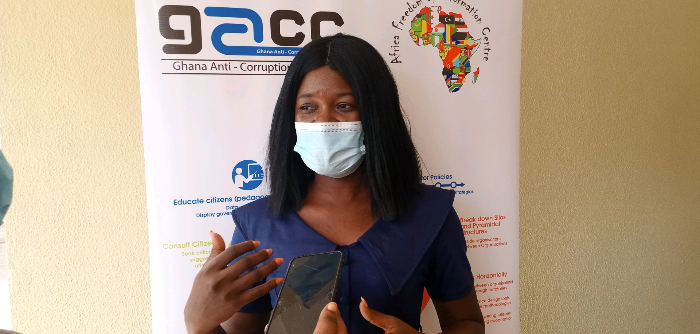

“…Basically what they’re helping us to do is to be able to promote data disclosure in these four countries. So we GACC having this source of fund, we believe that when we promote this, it will be at our own interest, especially having the CSOs and the media also supporting us to advocate,” Miss Djabatey stated.
She noted one of the challenges the Coalition faced was accessing data from the websites of the institutions to analyse.
“It was not easy because when it comes to advocacy, you need evidence or information to be able to advocate for and in a situation when you do not have information, it actually limits you,” she added.
Miss Djabatey further intimated the RTI law and the PPA as regulators should be able to work hand in hand to proffer solutions to the challenge of accessing information.
She also said corruption could be minimised if Ghana’s procurement system is checked to cover up the loopholes since a “scanty research” conducted by the GACC revealed most of the corruption that take place in the country are procurement related.
This, she averred, was the reason they focused on procurement and disclosure of information instead of the broader perspective of tackling corruption.

Engagement and advocacy, according to Miss Djabatey, is the approach the GACC has adopted in dealing with the institutions, and “those who would not be forthcoming in releasing information would be named and shamed.”
“The fact is that I come to you, I request for information and you don’t give to me, the next thing is that I’ll use another strategy and when you come out, then I can prove to you that you didn’t give me the information I requested for,” she said.
Migrating to GHANEPS
Meanwhile, the PPA has said it hopes to migrate all state entities onto its digital platform, GHANEPS, in two years time to abate manual procurement which is mostly associated with corruption.
GHANEPS (Ghana Electronic Procurement System) is a web-based, collaborative system, developed in accordance with the requirement of public procurement laws, to facilitate public procurement processes in Ghana. It offers a secure, interactive, dynamic environment for carrying out procurement of all categories, complexity or value.